Resources · Blue carbon
What is blue carbon, and why does it matter for Latin America?
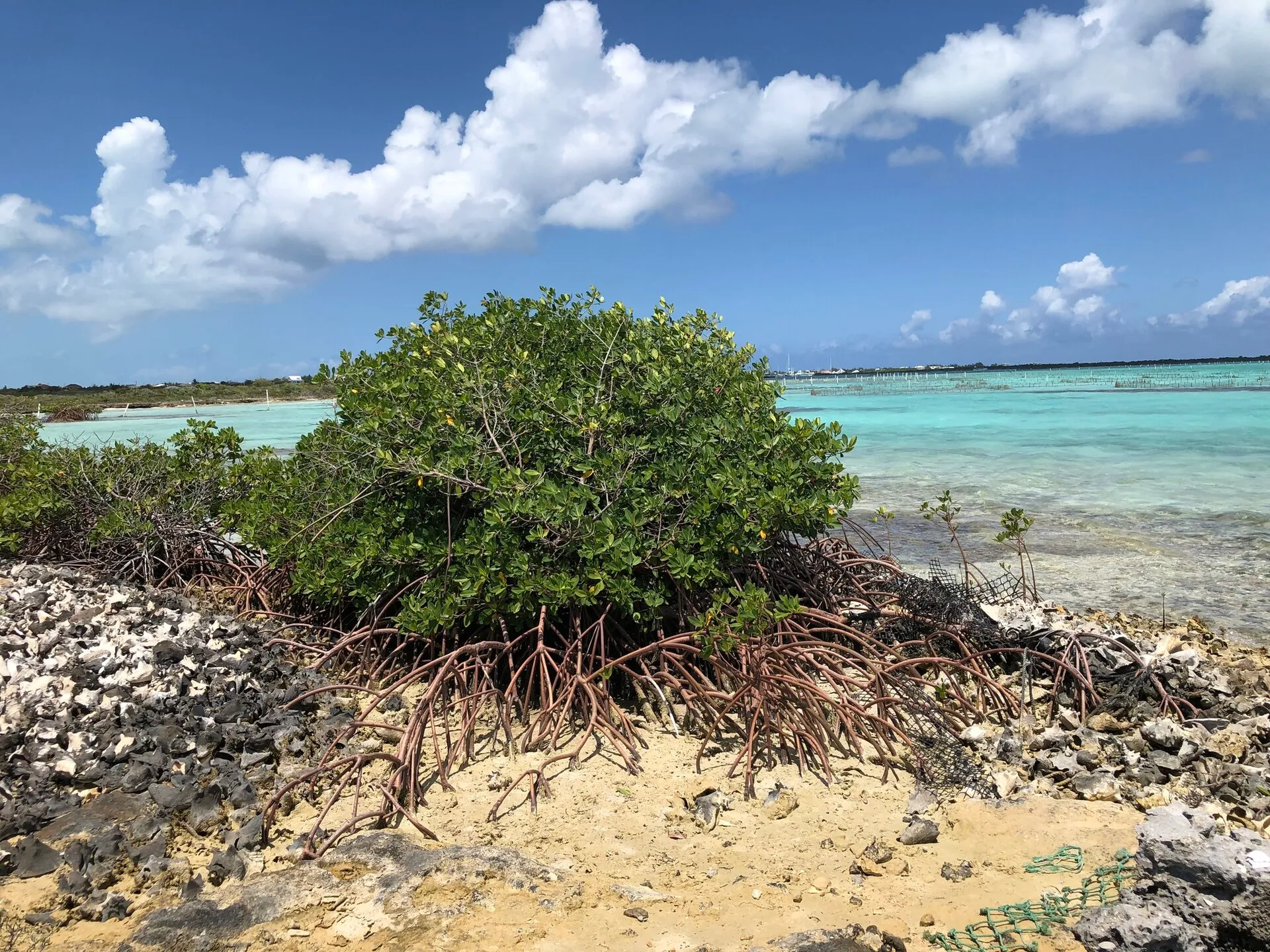
TL;DR
Blue carbon is carbon captured by coastal ecosystems — mostly mangroves. They cover less than 2% of the ocean but store nearly half of its buried carbon. The market grows at ~11% a year (2026–2035), mangrove restoration has a benefit-cost ratio of up to 15×, and Latin America — led by Brazil and Colombia — is one of the regions with the greatest low-cost restoration potential on the planet.
A small ecosystem with an outsized climate role
Blue carbon is the carbon captured and stored by coastal ecosystems: mangroves, seagrasses and salt marshes. Unlike terrestrial forests, these ecosystems bury carbon in anaerobic sediments for centuries, making them exceptionally stable carbon sinks. Though they cover less than 2% of the ocean's surface, they hold nearly half of the carbon buried in the sea.
Why mangroves lead the segment
Of the three blue-carbon ecosystems, mangroves accounted for around 68% of the segment's revenue in 2025, thanks to their high carbon density per hectare and already field-proven restoration methodologies. The blue-carbon market grows at a compound rate near 11% between 2026 and 2035, with Asia-Pacific leading today in value (~39–45% in 2025), while Latin America — led by Brazil and Colombia — ranks among the regions with the greatest low-cost restoration potential in the world.
The economics are compelling
According to Nature Communications (2025), the annual ecosystem-service value of mangroves is around USD 894 billion. Restoring them over 20 years would require between USD 40–52.1 billion in investment, generating a net gain in service value of USD 231–725 billion — a benefit-cost ratio of between 6.35 and 15.0×.
Demand outpaces the supply of verified projects
Corporate demand for high-integrity credits — with real social and biodiversity co-benefits — already exceeds supply. The voluntary carbon market could reach tens of billions of dollars by 2030, as low-quality credits get retired from the market. The bottleneck isn't demand or capital: it's the supply of well-structured, measured and verified projects. That's precisely where AZUL works, combining political access, agentic AI and territorial anchoring in the Sinú–Cispatá case.
FAQ
What is blue carbon?
It's the carbon captured and stored by coastal ecosystems — mangroves, seagrasses and salt marshes. Though they cover less than 2% of the ocean's surface, they hold nearly half of the carbon buried in the sea.
Why do mangroves lead the blue-carbon market?
Mangrove projects accounted for around 68% of the segment's revenue in 2025, thanks to their high carbon density and already-proven restoration techniques.
How cost-effective is mangrove restoration?
According to Nature Communications (2025), the benefit-cost ratio of mangrove restoration is between 6.35 and 15.0 — one of the most cost-effective climate investments that exist.
Sources: CAF (Blue Economy & Finance Forum, Monaco 2025); Green Climate Fund; Nature Communications (2025); TRIBUCORP · AZUL market analysis (June 2026).